Our Work
Built, documented, and in daily use
Two businesses we work in every week: AviNation, a client on our managed platform, and Aviation Soul, our family's company, where we build and test everything first. Tap any screen to see it full size.
Client: AviNation
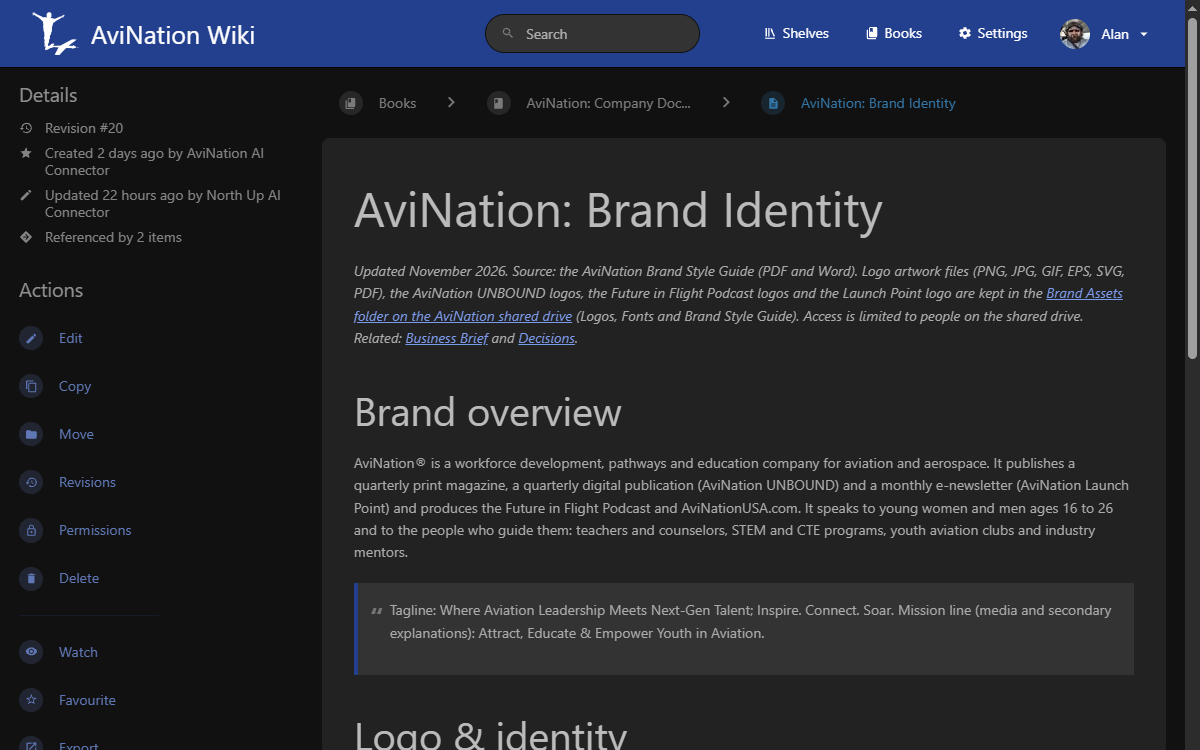
A company wiki the owner's AI works from
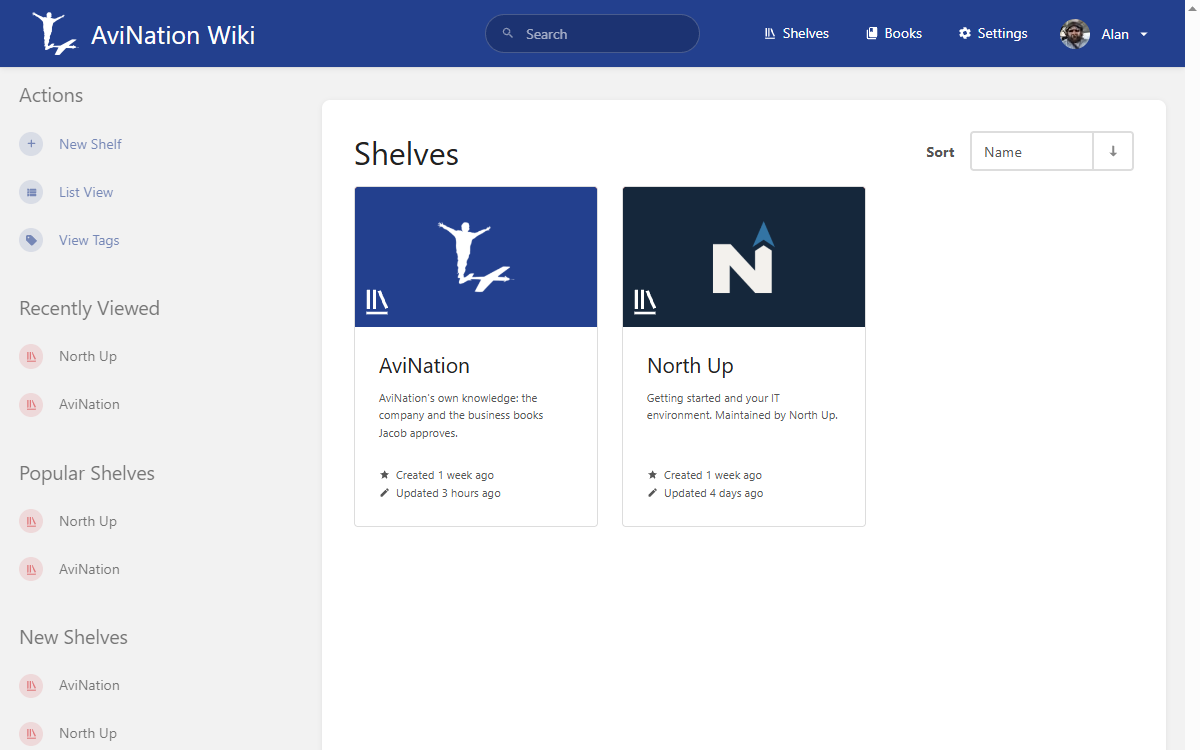
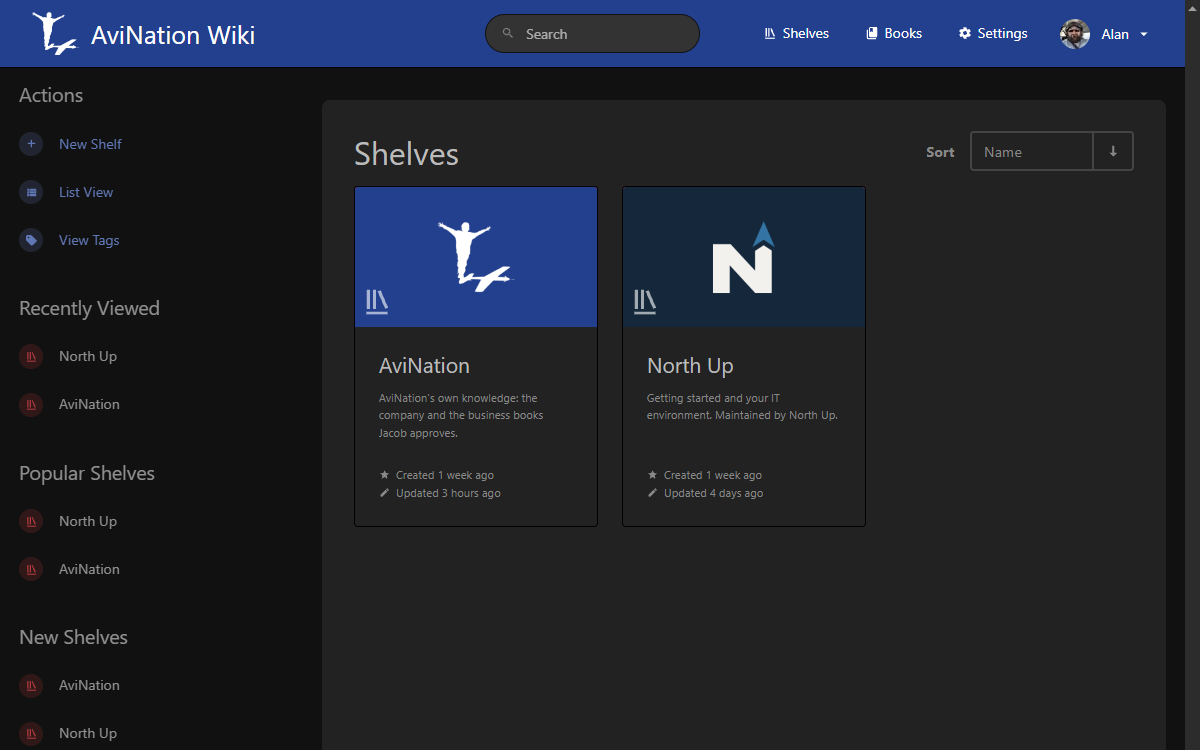
AviNation is a workforce development, pathways and education company for aviation and aerospace, and the publisher of AviNation Magazine. Its founder, Jacob Peed, uses AI every day; what he needed was a place for it to work from.
What It Needed
Plans, procedures, and decisions were spread across documents and AI chats, with no single place that Jacob, his team, or his AI could check.
What We Built
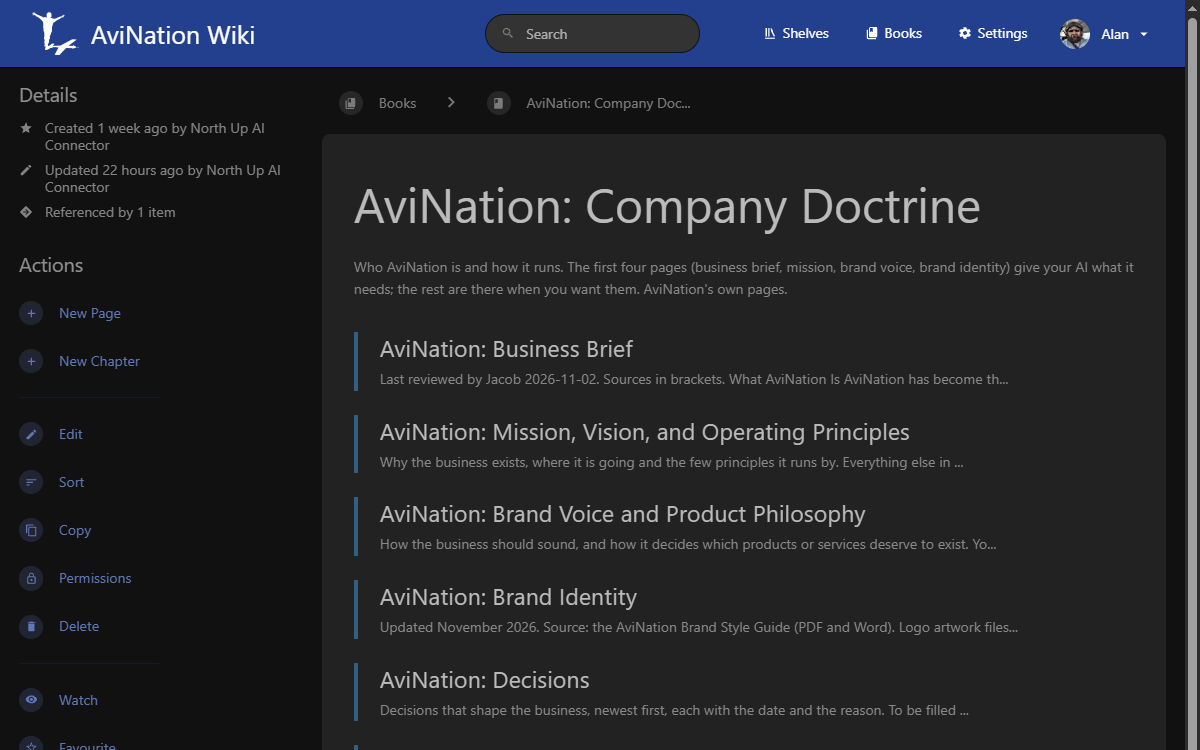
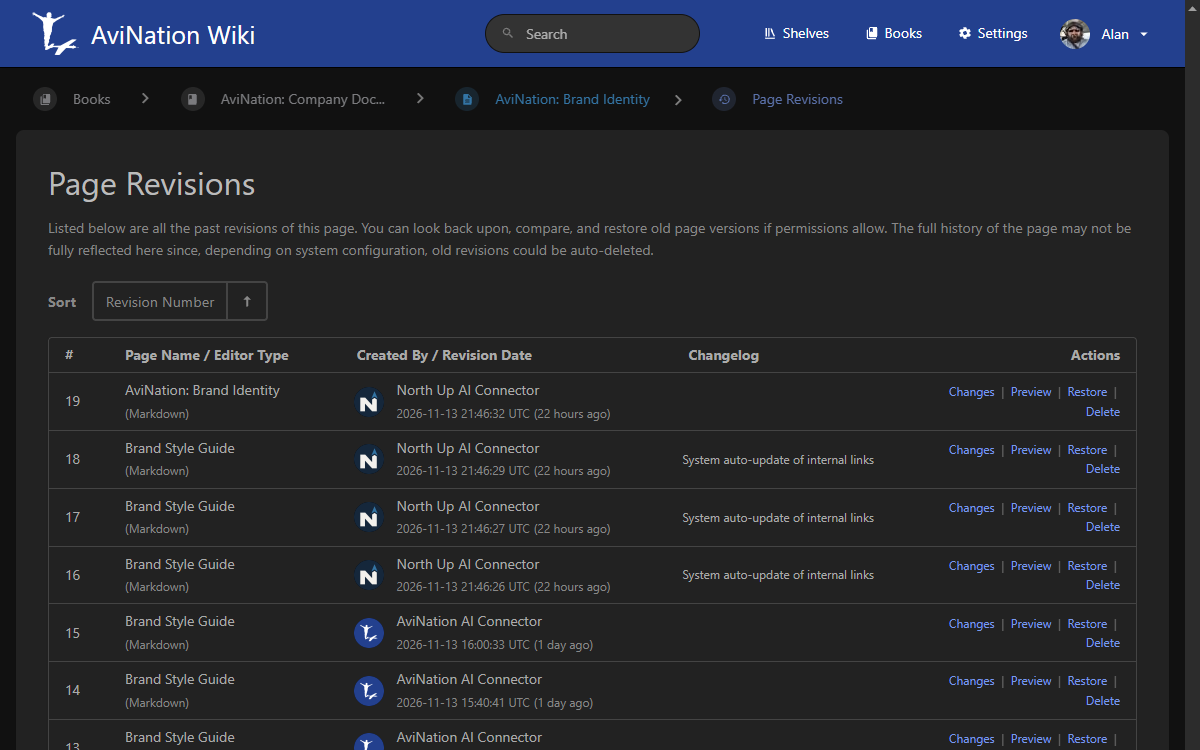
A private company wiki on its own server, organized the way the business works, with a starter set of pages for procedures, decisions, and IT records. Jacob's AI connects to it, reads it before it answers, and writes decisions back.
How It's Used
Jacob talks to his AI the way he always has. The difference is that it starts from his wiki, names the page it used, and keeps the plan current there instead of losing it when the chat ends.
Our own company: Aviation Soul
Where we build it first

Aviation Soul is our family's aviation gift and challenge coin company. We run it on the same kind of systems we build for clients, so we find the rough edges before you do.
What It Needed
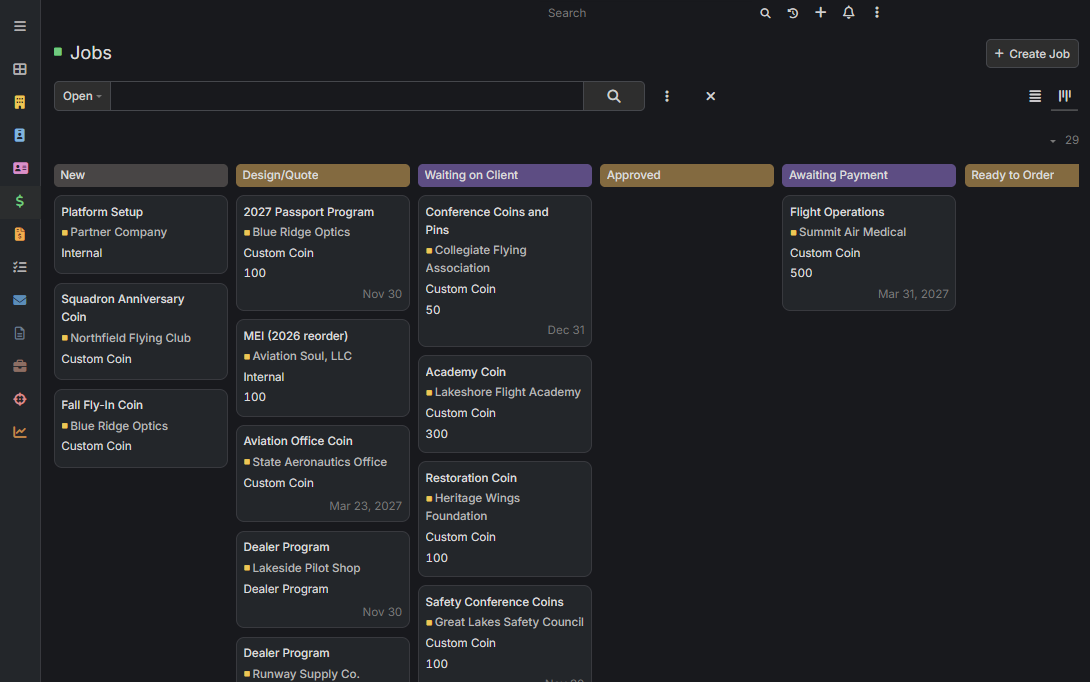
Custom coin jobs run for weeks, with quotes, proofs, payments, and vendor orders along the way. Online orders need to ship quickly. And as a husband and wife team, most of the know-how lived in our two heads.
What We Built
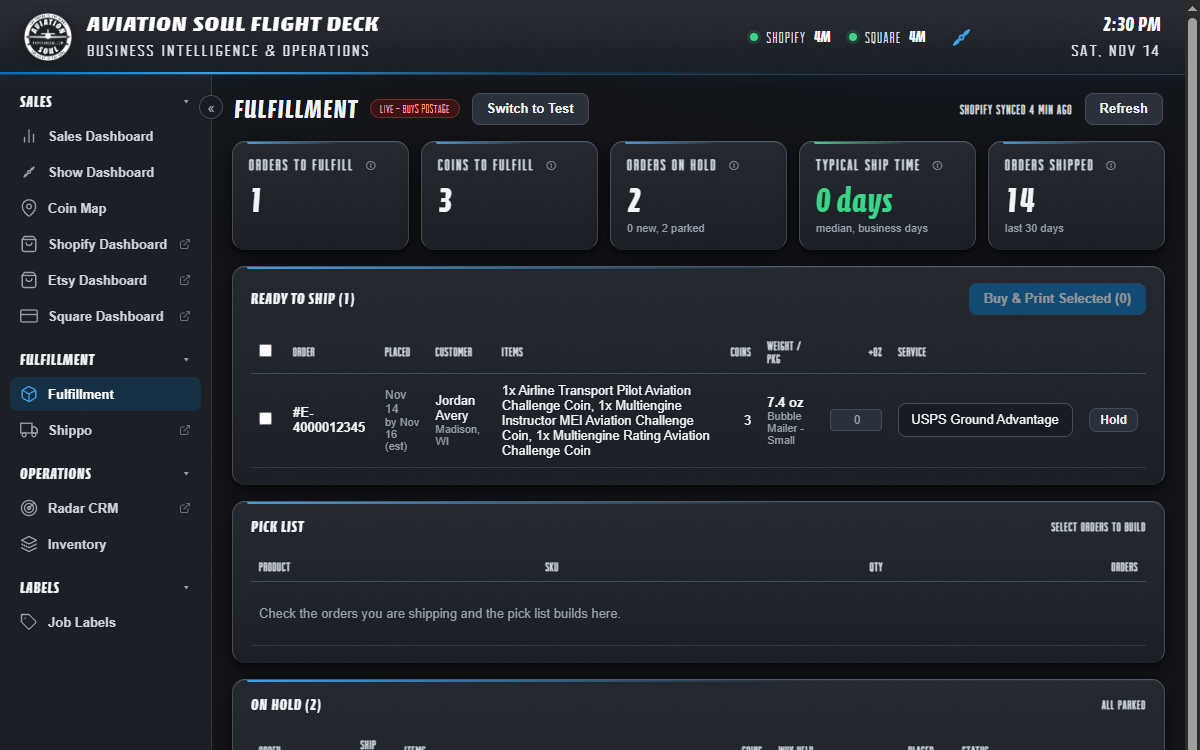
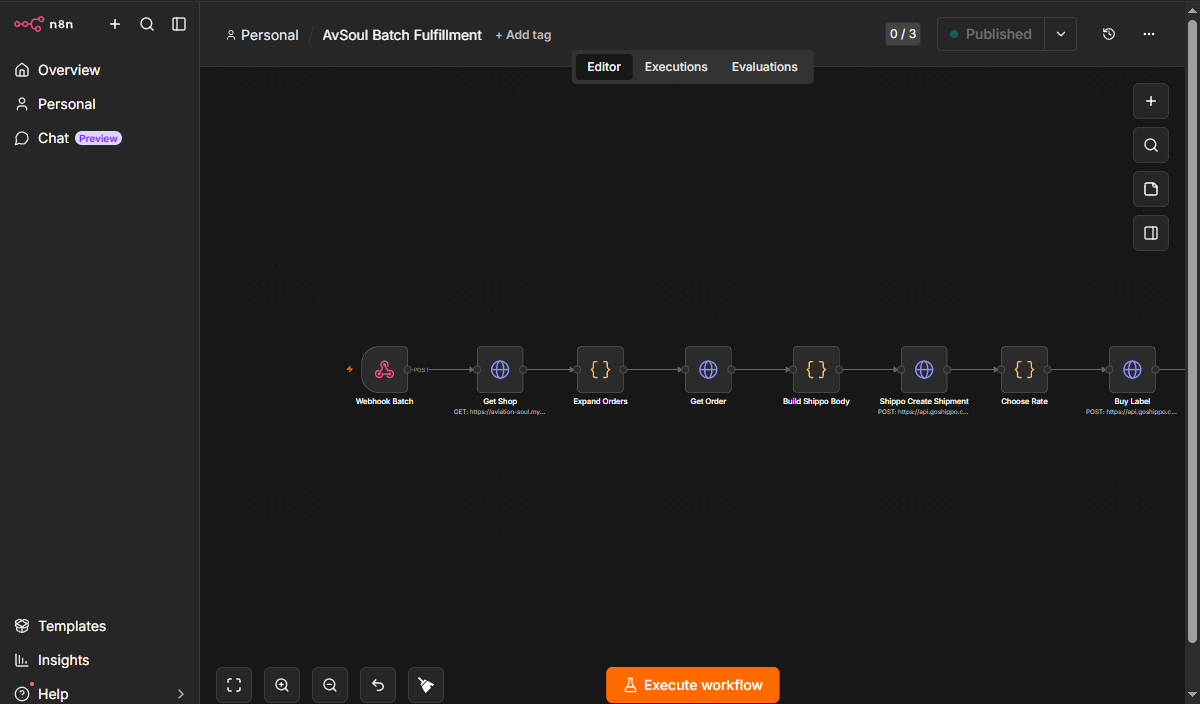
A CRM for customers and custom coin jobs, an order fulfillment dashboard, a company handbook, and an AI assistant that can look all of it up, tied together with automations.
How It's Used
Every job has a dated next step. Store orders come to one screen for packing and labels. AI helps put together proposals and invoices, and a person reviews everything before it goes out.
Also Built
- A proposal builder: custom coin proposals come together from the job record, proof artwork included, and a person checks each one before it goes out.
- A company handbook: procedures, product standards, and decisions in one searchable wiki, so the business does not live in one person's head.
- Trade show follow-up: business cards and show notes scanned and filed on the right customer's record, each with a dated next step.
- A packing station: addresses are checked and ship-by dates tracked before an order goes out, and shipping labels, packing slips, and case labels for custom jobs print at the pack desk.
- Event sales: airshow and in-person sales land in the same reports as the online store.
- Backups and monitoring: nightly encrypted backups with an offsite copy, and monitoring that alerts before a small problem becomes a big one.
These are custom builds that combine several tools. Your business may need some of them, all of them, or none; they are not all part of the managed platform.
Next step
Want something like this for your business?
Tell Alan what keeps landing on your desk. He will tell you plainly which of these, if any, would help.